

Current treatment regimens for type 2 diabetes in most cases are aimed at reducing sugar. This helps to control the condition, but does not solve the root cause — a violation of the mechanism that should control glucose levels.
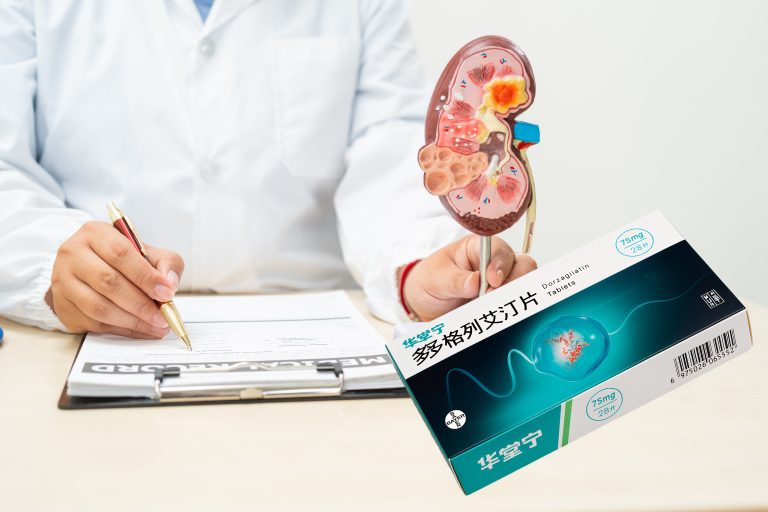
Dorzagliatin (Dorzagliatin) is the first drug of the GKA class (glucokinase activator), whose task is not to ‘crush sugar’, but to restore the sensitivity of a key enzyme of carbohydrate metabolism.
To understand its meaning, let’s start with the mechanics of the disease.
Sensor failure: What happens with type 2 diabetes
Type 2 diabetes is not about excess sugar per se. This is a failure of the glucose detection and response system.
Normally, the main regulator is the enzyme glucokinase.
It is localized at two critical points:
- Liver -determines when glucose needs to be disposed of and converted into glycogen.
- Pancreatic beta cells -triggers the first phase of insulin secretion in response to glucose growth.
In type 2 diabetes, glucokinase loses its sensitivity. The body stops correctly ‘seeing’ the sugar level:
- the pancreas does not respond in a timely manner,
- the liver continues to release glucose into the blood regardless of the need,
- sugar increases not because it is ‘too much’, but because the control system does not work.
Most traditional drugs try to compensate for this by external influence-by reducing the production of sugar production or stimulating insulin. But this does not restore the broken mechanism.
Three approaches: comparing therapeutic strategies
In clinical practice today, three major approaches co-exist.
1. Classical therapy (Metformin, sulfonylurea)
Principle: suppress the release of glucose by the liver, strengthen the work of the pancreas.
Problems with the method:
- load on the gastrointestinal tract and kidneys,
- progressive depletion of beta cells,
- no impact on the root cause,
- gradual transition to insulin over several years.
Expert assessment: the method controls the process, but does not change the trajectory of the disease.
2. GLP-1 agonists (Ozempic, Semaglutide)
Principle: increase the feeling of satiety, slow down the emptying of the stomach, stabilize sugar.
Limitations:
- therapy is long-term and often lifelong,
- weight and sugar refund after cancellation,
- frequent gastrointestinal side effects, risk of pancreatitis,
- loss of muscle mass due to lack of nutrition.
Peer review: an effective control tool, but not a mechanism for restoring metabolic sensitivity.
3. Dorzagliatin (GKA)
A drug that aims to restore the mechanism, not compensate
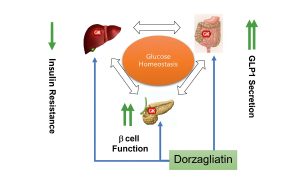
Principle: binds to glucokinase in the liver and beta cells, stabilizing its structure and restoring glucose sensitivity.
What gives the patient:
- correct perception of glucose levels,
- restoring the first phase of insulin secretion,
- reducing the load on beta cells,
- normalization of hepatic glucose regulation.
Key Features: the drug helps the system to work physiologically, and does not increase its wear.
Expert assessment: for the first time, it is possible to influence the underlying mechanism — the glucose sensor.
Clinical base: what the SEED and DREAM studies showed
Hua Medicine’s research (together with Bayer) lasted more than 10 years and included large randomized samples.
The main result discussed by the world of diabetology:
After a year of therapy, 65.2% of patients maintained normal blood sugar levels for another 12 months without medication.
It means:
- restoring glucokinase function,
- sustained metabolic response,
- possibility of remission without daily pharmacotherapy.
Metformin or insulin do not show such effects.
Security Profile
Features of Dorzagliatin metabolism are important for patients with concomitant diseases:
- the drug is not excreted by the kidneys, which makes it available for severe CKD;
- hypoglycemia is practically not observed due to the glucose-dependent mechanism of action;
- adverse reactions are limited to mild gastrointestinal symptoms at the beginning of administration.
Why the drug is not available in pharmacies
The reason is not efficiency or lack of recognition.
These are the features of regulatory processes:
- updating of clinical guidelines in Russia is slow,
- The EU and the US have parallel registration procedures,
- Demand in Asia exceeds production volumes.
Diabetes progresses faster than the bureaucracy moves-hence the interest of patients in legal individual importation.
The essence of the choice: controlling symptoms or restoring regulation
Switching to root-cause therapy changes the way we approach the disease.
Metformin and GLP-1 provide control — sometimes good, but limited.
Dorzagliatin offers a restoration of the regulatory mechanism without which type 2 diabetes cannot be stabilized in the long term.
That is why it is considered as a potential tool for achieving remission — not a temporary improvement, but a stable metabolic balance.